
Category
If you’ve been approved for psychosocial support under the NDIS, you’ve probably seen the words “Recovery Coaching” somewhere on your plan and then moved straight past them without really knowing what they mean.
You’re not alone. Recovery Coaching is one of the most under-explained, under-used supports in the entire NDIS, even though it’s often the single most valuable line item for someone living with a psychosocial disability.
Here’s what it actually is, what it isn’t, and why it might be the missing piece in your plan.
What Is a Psychosocial Recovery Coach?
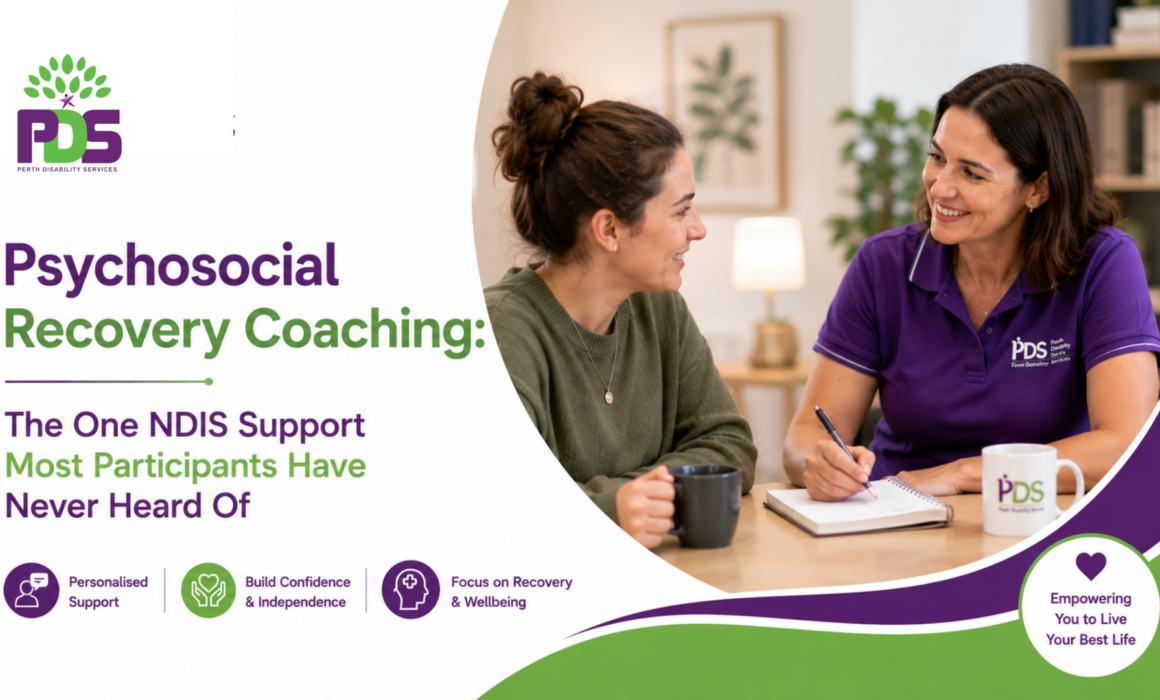
A Psychosocial Recovery Coach is a specialised NDIS worker who helps participants living with a mental health-related disability set goals, build daily living skills, and navigate a system that can otherwise feel impossible to move through alone.
Unlike a support worker who might help with a specific task cooking, cleaning, getting to appointments a Recovery Coach works across your entire life. They look at the big picture: your NDIS plan, your relationships with other providers, your housing, your goals, and your day-to-day stability, and they help all of it work together.
Think of them less like a task-based helper and more like a strategic partner in your recovery journey.
What a Recovery Coach Actually Does
Recovery Coaching isn’t therapy, and it isn’t case management in the traditional sense. It sits in its own category. Day to day, a Recovery Coach might:
- Help you set and track meaningful recovery goals
- Coordinate between your NDIS supports, GP, psychiatrist, and other services
- Support you through a mental health crisis or relapse, and help you build a plan to prevent the next one
- Advocate on your behalf during plan reviews or funding disputes
- Build your confidence and independence so you rely on formal supports less over time, not more
That last point matters. A good Recovery Coach isn’t trying to make you dependent on them they’re trying to work themselves out of a job by helping you build the skills and systems to manage your own recovery.
Who Actually Qualifies?
Recovery Coaching sits under Capacity Building supports in an NDIS plan, and it’s specifically designed for people with a psychosocial disability meaning a mental health condition that has a significant, ongoing impact on daily functioning.
You’re likely to be a strong candidate for Recovery Coaching if:
- You’ve had multiple hospital admissions or crisis episodes in the past 12 months
- You’re juggling several providers (GP, psychiatrist, support coordinator, allied health) and nothing feels joined up
- Your mental health condition affects your ability to maintain housing, work, or relationships
- You’ve recently come out of hospital or a crisis period and need support re-establishing routine
If any of that sounds familiar, it’s worth raising directly with your planner or support coordinator Recovery Coaching often isn’t offered automatically; participants frequently have to ask for it by name.
Recovery Coach vs Support Coordinator: What’s the Difference?
This is the mix-up that trips up almost everyone.
A Support Coordinator helps you understand and use your NDIS plan connecting you to providers, sorting out service agreements, and making sure your funding is being spent as intended.
A Recovery Coach does some of that too, but layers a mental health recovery lens over the top of it. They’re trained specifically in psychosocial disability, recovery-oriented practice, and crisis response skills a general Support Coordinator may not have.
Some participants have both. Others only need one. It comes down to the complexity of your situation and how tightly your NDIS supports need to be tied to your mental health recovery specifically.
Why This Support Matters More in 2026
With the NDIS placing growing emphasis on psychosocial disability and functional need (rather than diagnosis alone), demand for trained Recovery Coaches has grown sharply. Participants who have one report fewer crisis episodes, more stable housing, and critically a support system that actually talks to itself instead of operating in silos.
If your plan has psychosocial funding but no Recovery Coach attached to it, that’s worth flagging at your next review.
Conclusion
A Psychosocial Recovery Coach isn’t just another name on your provider list for many participants, it’s the connective tissue that makes every other support actually work. If you’re managing a mental health condition and feel like your NDIS supports are disconnected, this is the support most likely to fix that.
📞 Let’s Stay Connected
Looking for guidance on Recovery Coaching or psychosocial supports?
📧 info@pdswa.com.au
📞 08 6118 9090
🌐 perthdisabilityservices.com.au
FAQ’s
1. Is a Recovery Coach the same as a therapist or counsellor?
No. A Recovery Coach doesn’t provide clinical treatment. They help you build the skills, structure, and coordination to live well alongside your condition your clinical team handles diagnosis and treatment.
2. How do I get Recovery Coaching added to my plan?
Raise it directly with your planner or LAC, ideally with evidence from a treating clinician showing your psychosocial disability significantly affects daily functioning.
3. Can I have a Recovery Coach and a Support Coordinator at the same time?
Yes, if your situation is complex enough to warrant both they work alongside each other, not instead of one another.
4. What happens if I have a mental health crisis while working with a Recovery Coach? Part of their role is helping you build (and use) a relapse prevention and crisis plan, and supporting you through it if a crisis does occur.
5. Is Recovery Coaching only for people who are currently unwell?
No. It supports the full spectrum from acute crisis recovery through to participants who are stable but working on longer-term independence.