NDIS Perth
Category

Uncategorised

Home / Uncategorised
""/
Uncategorised

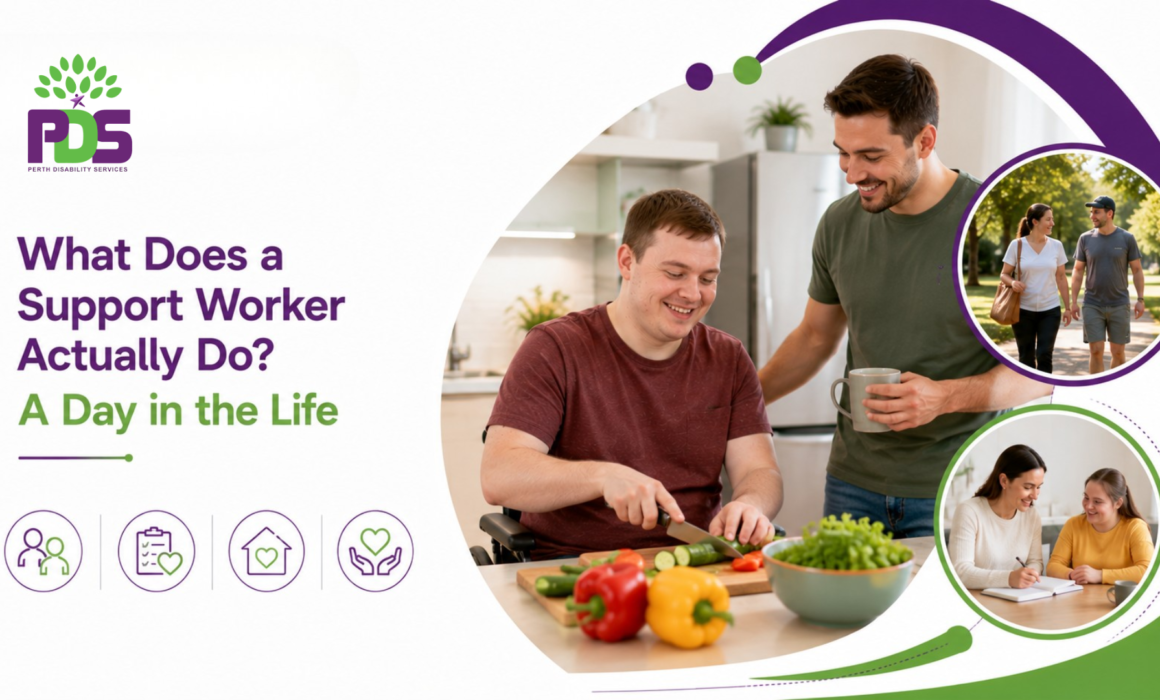
What Does a Support Worker Actually Do? A Day in the Life

What Does a Disability Support Worker Do?

A disability support worker assists people with disabilities to manage everyday activities, develop independence, and participate in their communities.

The role can look different for every participant because support is based on individual needs, preferences, goals, and routines. Some participants may need assistance with personal care and household activities, while others may primarily need support with community participation, appointments, or developing life skills.

At Perth Disability Services (PDS), support workers take a person-centred approach, working alongside participants to help them achieve their individual goals and maintain greater independence.

Starting the Day With the Participant

A support worker’s day may begin by checking in with the participant and understanding what they would like to accomplish that day.

This could involve discussing the day’s schedule, preparing breakfast, getting ready for appointments, organising personal belongings, or planning activities.

Rather than assuming what a participant needs, a good support worker listens and works with the individual to understand their preferences and priorities.

This helps ensure that support remains personalised and respectful.

Helping With Personal Care and Daily Routines

Some participants may require assistance with personal care and daily routines.

Depending on the person’s needs, this may include support with:

  • Getting dressed
  • Grooming
  • Personal hygiene
  • Preparing meals
  • Organising daily routines
  • Moving safely around the home
  • Completing everyday activities

Personal care is delivered with dignity and respect. The support worker’s role is to provide the appropriate level of assistance while encouraging the participant to maintain as much independence as possible.

Preparing Meals and Managing Household Tasks

Daily household activities can sometimes become challenging for people living with disabilities.

A support worker may assist with meal preparation, grocery shopping, laundry, cleaning, organising household items, or other everyday tasks.

Where appropriate, support workers can also use these activities as opportunities for skill development. For example, a participant who wants to improve their cooking skills may be encouraged to participate in preparing a simple meal rather than having the worker complete everything for them.

These small steps can help build confidence and practical life skills.

Supporting Appointments and Community Participation

A support worker’s role can extend beyond the home.

Participants may need assistance attending appointments, shopping, visiting family and friends, participating in recreational activities, or accessing community facilities.

Community participation is an important part of living an active and meaningful life. Support workers can help participants overcome barriers and feel more confident participating in activities that matter to them.

PDS provides support that can help participants engage with their communities while working towards their individual goals.

Building Everyday Life Skills

Disability support is not simply about completing tasks for someone.

For many participants, an important part of support is developing skills that can increase independence.

A support worker may encourage participants to practise skills such as:

  • Planning a daily routine
  • Preparing meals
  • Managing household tasks
  • Shopping
  • Using public transport
  • Communicating with others
  • Making decisions
  • Participating in community activities

The level of assistance depends on the individual’s abilities and goals.

Providing Social and Emotional Support

A support worker can also provide companionship and encouragement during everyday activities.

For some participants, having a consistent and trusted support worker can make it easier to participate in social activities, explore new interests, and build confidence.

Support workers should respect the participant’s choices, preferences, privacy, and personal boundaries while creating a positive and supportive environment.

Every Participant Has a Different Day

There is no single routine for a disability support worker because every participant is different.

One participant may need help preparing breakfast and getting ready for work. Another may require assistance with household activities and attending an appointment. Someone else may spend the day developing life skills or participating in a community activity.

This flexibility is one of the important aspects of person-centred disability support.

The focus is not simply on completing tasks. It is about understanding what matters to the participant and providing support that helps them work towards their goals.

The Goal: Greater Independence and Quality of Life

A support worker’s role can have an important impact on everyday life.

By providing practical assistance, encouragement, and personalised support, support workers can help participants manage daily activities, build confidence, strengthen life skills, and participate more actively in their communities.

At PDS, the focus is on supporting participants in a way that respects their choices and encourages greater independence.

Why Choose PDS Support Workers?

Perth Disability Services is a registered NDIS provider serving Perth and surrounding areas. PDS provides personalised disability support services designed around the needs and goals of each participant.

The team understands that quality disability support is about more than assistance with daily tasks. It is about building trust, respecting individual choices, encouraging independence, and helping participants live meaningful lives.

Let’s Stay Connected

If you would like to learn more about disability support workers and personalised NDIS support in Perth, contact the PDS team today.

Phone: 08 6118 9090
Email: info@pdswa.com.au


FAQ’s

1. What does a disability support worker do?

A disability support worker assists participants with everyday activities based on their individual needs. This may include personal care, household tasks, meal preparation, community participation, appointments, and life-skill development.

2. Does a support worker do everything for the participant?

Not necessarily. The aim of quality disability support is often to encourage independence. A support worker may assist with tasks while encouraging the participant to participate and develop their own skills where appropriate.

3. Can a support worker help with personal care?

Yes. Depending on the participant’s needs and funded supports, a support worker may assist with personal care activities such as grooming, dressing, hygiene, and daily routines.

4. Can support workers help participants access the community?

Yes. Community participation can include assistance with shopping, appointments, recreational activities, social events, and other meaningful community activities, depending on the participant’s needs and NDIS plan.

5. Does every participant have the same support routine?

No. Every participant has different goals, abilities, preferences, and support requirements. A person-centred approach allows support to be tailored to the individual.
""/
Uncategorised

Module 5A: SIL and What It Means for Quality Service Delivery

The Foundation of Safe, Independent Living

Supported Independent Living (SIL) is one of the most important supports available through the NDIS. It enables people with disabilities to live as independently as possible in their own homes, with tailored support that respects their autonomy, dignity, and choices.

Module 5A, the newest addition to the NDIS Practice Standards (commenced 1 July 2026), sets the framework for how SIL services must be delivered. It represents a significant shift in how providers approach supported living with stronger emphasis on participant voice, safeguarding, and genuine independence.

If you’re receiving SIL supports, receiving a SIL plan, or considering independent living with support, understanding Module 5A helps you know what quality service delivery looks like and what to expect from your provider.

What Is Supported Independent Living (SIL)?

Supported Independent Living is NDIS funding that pays for support workers to help you live independently in your own home. Unlike group homes or facility-based care, SIL is about:

  • Tailored person-to-person support at your home, available constantly or for a substantial portion of each day
  • Supporting daily living tasks like cooking, cleaning, personal care, community access, and health management
  • Promoting autonomy and choice so you can live as independently as possible
  • Community connection enabling you to participate in your community as you choose
  • Your home, your rules where you have genuine control over your living space and decisions

The key difference between SIL and other supports is the intensity and constancy of the relationship. SIL providers aren’t managing a group facility—they’re supporting you, in your home, on your terms.


Module 5A: The Four Core Standards

Module 5A sets four mandatory standards that SIL providers must meet. Understanding these helps you know what to expect and what your provider should be delivering.

Standard 1: Supported Decision-Making

What It Means: Participants must be supported to make decisions about their lives, their supports, and their living arrangements. This isn’t about the provider deciding what’s best for you—it’s about you deciding, with support.

In Practice:

  • You have information about your options and choices
  • Support workers help you understand consequences of decisions
  • Your preferences are genuinely considered
  • Decisions reflect what you want, not what’s convenient for the provider
  • Your decision-making capacity is presumed, not questioned
  • You’re supported to express your views, even if others disagree

Example: You want to try cooking your own meals rather than having staff prepare them. Module 5A requires your provider to support this decision, even if it’s riskier or takes longer. The support worker’s role is to teach and supervise, not to take over because it’s easier.

Standard 2: Safeguarding

What It Means: Providers must protect you from harm, abuse, neglect, and exploitation while respecting your independence.

In Practice:

  • Systems are in place to identify and respond to safety concerns
  • You have access to reporting mechanisms that feel safe
  • Your privacy and dignity are protected
  • Visitors and personal relationships are respected (not controlled)
  • Incidents are properly documented and reviewed
  • Your access to house keys, possessions, and mail isn’t restricted without good reason
  • Any restrictions are part of a documented behaviour support plan, not arbitrary

Example: You want to invite friends over. Safeguarding doesn’t mean the provider decides who visits or monitors everything. It means your provider supports you to make safe choices while respecting your autonomy.

Standard 3: Practice Governance

What It Means: The provider has clear systems, processes, and leadership that ensure quality, safety, and continuous improvement.

In Practice:

  • Clear policies and procedures guide how support is delivered
  • Staff are trained in SIL-specific practice
  • Participant feedback drives improvement
  • Incidents and risks are managed systematically
  • There’s accountability if standards aren’t met
  • Regular review ensures services remain person-centred and effective

Example: Your provider doesn’t just respond to problems—they have systems to prevent them, regular supervision of staff, and clear processes for improvement.

Standard 4: Agreements About Tenancy, Housing, and Support Arrangements

What It Means: Everything about your housing and support must be clear, documented, and agreed to by you.

In Practice:

  • You have a separate agreement for your tenancy (housing) and a separate agreement for your support services
  • If your provider manages both, conflicts of interest are documented and managed
  • Consultation happens before new people move into shared living arrangements
  • Your rights as a tenant are protected
  • Support arrangements can be changed, but only with your agreement
  • Key decisions are documented and transparent

Example: If you’re in a shared house, your provider consults with you before a new housemate moves in. You’re not surprised or excluded from decisions affecting your home.

What Supported Independent Living Actually Requires

Module 5A defines SIL specifically as support for people who:

  • Require constant, or immediately available, person-to-person support at all times during a day or for a substantial portion of a day
  • Need assistance with the tasks of daily life—personal care, meals, cleaning, health management, community access, etc.
  • Want to live as autonomously as possible in their own home and access their community
  • Benefit from a coordinated support package managed by a provider working with you toward greater independence

This definition is important. It’s not about supervision or control—it’s about enabling independence through tailored, responsive support.


The New Requirements: What’s Changed

Module 5A introduced stricter requirements than previous standards. Here’s what providers now must do:

Separate Agreements

If a provider manages both your housing (tenancy) and your support:

  • You must have a separate agreement for each
  • Conflicts of interest must be documented and managed
  • This prevents situations where the provider controls both your home and your support, which can create power imbalances

What this means for you: You understand exactly what’s being paid for and what rights you have as a tenant versus as a support participant.

Consultation on Shared Living

If you live in a shared house with other SIL participants:

  • Existing residents must be consulted before new people move in
  • Your preferences and concerns are genuinely considered
  • Changes to housemates aren’t imposed without your input

What this means for you: You have a voice in who shares your home. You’re not just told, “A new person is moving in next week.”

Key Access and Possessions

  • You have access to house keys (not locked away by staff)
  • You can keep possessions in your home without unreasonable restrictions
  • Limits on access or possessions only exist if there’s a documented behaviour support plan
  • Even with a plan, restrictions must be necessary and proportionate

What this means for you: Your home is genuinely your home. Reasonable independence is assumed, not restricted without cause.

Your Voice in Decision-Making

  • Your preferences about your support workers, schedules, and activities are genuinely considered
  • Decisions affecting your life are made with you, not for you
  • You have mechanisms to raise concerns and have them taken seriously

What this means for you: You’re not a passive recipient of services—you’re the person directing your own support.


Why Module 5A Matters

Module 5A represents a shift in how the NDIS approaches supported living. It moves from a model where providers might manage participants’ lives toward a model where providers genuinely support participant autonomy.

For Participants: Module 5A strengthens your rights and your voice. It ensures that SIL support respects your independence and dignity.

For Providers: Module 5A requires more intentional practice. It’s not enough to provide support—providers must actively promote participant autonomy, document agreements clearly, and ensure safeguarding systems are robust.

For Quality: Module 5A improves the overall quality of SIL services by setting clear expectations and holding providers accountable.


How Quality SIL Providers Approach Module 5A

Excellent SIL providers have made significant changes to align with Module 5A. They:

Invest in Staff Training: Support workers receive training in person-centred practice, supported decision-making, safeguarding, and tenancy rights. They understand their role is to support independence, not to control.

Create Clear Documentation: Separate agreements for housing and support are standard. Behaviour support plans (if needed) are documented and regularly reviewed. Conflict of interest processes are transparent.

Build Genuine Partnerships: Providers work with participants, not for them. Regular consultation, feedback mechanisms, and participant involvement in service design are standard practice.

Manage Safeguarding Systematically: Comprehensive incident management, staff supervision, and continuous improvement processes ensure participants are safe while maintaining independence.

Respect the Home: Your home is your home. Providers support you to maintain it, access it fully, and control what happens in it.


The Deadline: What Providers Need to Know

Module 5A commenced on 1 July 2026. For existing registered SIL providers, the standard applies from the date the Commissioner decides whether to vary their registration. For providers applying to register in SIL:

  • Applications by 1 October 2026: Providers are bound from the decision date
  • Applications after 1 October 2026: Providers must comply from 1 October 2026

This is a real deadline. Unregistered SIL providers cannot lawfully provide SIL services after 1 October 2026 without registration.


What This Means for Current SIL Participants

If you’re currently receiving SIL support:

Your provider should be:

  • Explaining Module 5A and how it affects your services
  • Updating agreements to comply with the new standards
  • Ensuring safeguarding and governance systems are robust
  • Supporting your voice and autonomy

You can expect:

  • Clearer agreements about your housing and support
  • Genuine consultation on decisions affecting you
  • More intentional focus on your independence
  • Stronger safeguarding and complaint mechanisms

If your provider isn’t doing these things: Raise it with them. Module 5A is now law. Quality SIL providers are proactively implementing it.


If You’re Considering SIL

Module 5A means you can expect higher standards from SIL providers. When exploring SIL options:

  • Ask about their Module 5A compliance: Do they have separate agreements? Clear safeguarding processes? Support for your decision-making?
  • Ask about independence: How do they support you to do more, not less? What’s their approach to helping you build skills?
  • Ask about your voice: How is participant feedback used? How are decisions made with you?
  • Ask about training: Are staff trained in person-centred practice and supported decision-making?


Key Points: What Module 5A Requires

AspectWhat It Means
Supported Decision-MakingYour choices matter. Support workers help you decide, not decide for you.
SafeguardingYou’re protected from harm while maintaining independence and autonomy.
Practice GovernanceProviders have clear systems, trained staff, and accountability.
AgreementsHousing and support are separate. Consultation happens. Your home is yours.
IndependenceYou have keys, possessions, and control. Restrictions only with documented plans.
Your VoiceYou direct your support. Your preferences are genuinely considered.


Conclusion

Module 5A represents a significant step forward in how the NDIS approaches supported living. It strengthens participant rights, promotes genuine independence, and sets clear expectations for provider practice.

If you’re receiving SIL support, Module 5A means your provider should be delivering services that respect your autonomy, protect your safety, and support you to live as independently as possible in your own home. Your voice matters. Your home is yours. Your choices are valid.

Quality SIL providers are already implementing these standards thoughtfully—because good practice isn’t about compliance, it’s about genuinely supporting people to live the lives they choose.

If you’re exploring SIL or have questions about how Module 5A affects your supports, talk to your planner, your LAC, or your provider. Understanding these standards helps you know what to expect and what to ask for.


📞 Let’s Stay Connected

Looking for guidance on SIL services or understanding your NDIS support options?

📞 08 6118 9090
✉️ info@pdswa.com.au

FAQs

Q: What exactly is the difference between SIL and other disability support?
A: SIL is person-to-person support in your own home, available constantly or for substantial parts of the day. It’s designed to support your independence in your own space, not in a group facility. Module 5A sets the standards for this specific service type.

Q: Does Module 5A mean my provider has to do everything I ask?
A: No. Supported decision-making means you’re involved in decisions and your preferences are genuinely considered but providers still have a responsibility to keep you safe. It’s about partnership, not control in either direction.

Q: What if my current SIL provider isn’t following Module 5A yet?
A: Providers are required to comply. If you’re concerned about compliance, raise it with your provider directly, or contact the NDIS Quality and Safeguards Commission if you believe standards aren’t being met.

Q: Can my provider limit my access to my house or possessions?
A: Generally no, unless there’s a documented behaviour support plan in place that justifies it. Even then, restrictions must be necessary and proportionate. Your home should feel like your home, not a controlled environment.

Q: Does Module 5A mean I have more control over my support arrangements?
A: Yes. Supported decision-making is a core standard. Your preferences about support workers, schedules, activities, and how support is delivered should genuinely influence how your plan works.

""/
Uncategorised

How PDS Supports Families and Carers in NDIS Disability Services

The Foundation of Quality Disability Support

The quality of disability support services depends fundamentally on the training, qualifications, and competence of support workers. Participants deserve workers who are not only qualified but also compassionate, skilled, and committed to promoting independence.

At Perth Disability Services, we believe that ongoing training and professional development are essential to delivering excellent care. Good training creates support workers who understand their role, respect participant autonomy, and deliver services that make a real difference.


Beyond Certifications: Soft Skills Matter

While formal qualifications are essential, the best support workers also demonstrate the personal qualities that make a real difference matter deeply to participants. Good training develops:

  • Communication skills that allow workers to listen and understand
  • Empathy and emotional intelligence
  • Problem-solving abilities and flexibility
  • Patience and professionalism under pressure
  • Cultural awareness and respect for diversity

These human skills transform qualified workers into genuinely excellent support providers.

Ongoing Training and Specialisation

Quality disability support providers invest in continuous training. PDS ensures support workers receive regular updates in:

  • Participant-specific needs and preferences
  • Behaviour support and de-escalation techniques
  • Health and medical considerations
  • Community integration strategies
  • Emerging best practices in disability support

This ongoing development ensures our team remains competent and current in their practice.

Creating a Culture of Excellence

Good training is not just about delivering modules. It’s about creating a workplace culture where learning is valued, workers feel supported, and quality is consistently prioritised.

At PDS, we mentor new workers, facilitate peer learning, and celebrate achievements. We believe that well-trained, supported workers provide better outcomes for participants.

How Quality Training Translates to Better Services

When support workers receive quality training, participants benefit through:

  • Increased confidence in their support team’s competence
  • Better support for achieving personal goals
  • Improved safety and wellbeing
  • More effective communication and problem-solving
  • Greater respect for their independence and choices

Quality training directly translates to better participant outcomes.

Let’s Stay Connected

Quality support workers transform lives. If you want disability support services backed by an Registered Ndis excellently trained team , PDS is here for you.

📞 08 6118 9090
✉️ info@pdswa.com.au


FAQ’s

  1. What qualifications should disability support workers have?

    At minimum, workers should hold a Certificate III in Disability Support, First Aid/CPR, and relevant Working with Children Checks where needed.

  2. Why does ongoing training matter if workers are already qualified?

    Disability support evolves with new research and best practices. Ongoing training ensures workers stay current and continue improving their skills.

  3. How does PDS ensure its support workers are well-trained?

    We require all workers to hold relevant qualifications, provide induction training, ongoing professional development, and regular supervision and feedback.

  4. Can support workers specialise in particular areas?

    Yes, we support workers in developing expertise in areas like behaviour support, community access, health care, or specific disabilities.

  5. How does training quality impact my experience as a participant?

    Well-trained workers understand your needs, communicate effectively, respect your independence, and deliver services that genuinely help you achieve your goals.

""/
Uncategorised

THERAPY SERVICES FOR CHILDREN WITH COMPLEX DISABILITIES 

Why Traditional Therapy Isn’t Always Enough for Complex Disability

When your child has complex disabilities, therapy can feel like another appointment to schedule, another expert to meet, another set of exercises to practice. Yet the most transformative therapeutic progress often happens not in clinical rooms but in the messy, joyful moments of everyday life—during meals, playtime, and family routines.

The shift toward family-centered, play-based therapy represents a fundamental reimagining of how we support children with complex needs. Rather than extracting children from their natural environments for structured sessions, modern therapeutic approaches embed support directly into the places where children actually live, learn, and connect with others.

Play Is Therapy: The Power of Natural Learning

Children learn best through play, yet many therapy models abandon this principle when working with complex disabilities. Progressive therapy services recognize that therapeutic goals can be woven seamlessly into the activities children already enjoy.

Instead of conducting seated, structured exercises that mimic clinical settings, effective therapists work alongside families to identify natural opportunities for skill development. A child working on core strength might practice sitting balance during sibling playtime rather than isolated therapy sessions. A child developing communication skills might use augmentative communication during family meals when motivation is highest.

This play-based approach transforms therapy from something that feels like work into an organic part of childhood. Children remain engaged because activities feel fun and meaningful rather than clinical and obligatory. Simultaneously, progress happens more naturally because practice occurs frequently across multiple environments rather than concentrated in scheduled appointments.

The Collaboration Imperative: Parents as Partners, Not Passive Observers

Children with complex disabilities typically work with multiple professionals: therapists, medical teams, educators, support coordinators, and specialists. Without coordination, this network becomes overwhelming for families who find themselves repeatedly explaining their child’s needs, history, and goals to different providers.

Effective therapy services prioritize genuine collaboration. Therapists communicate regularly with educators, medical teams, and family members, ensuring everyone works toward consistent goals. More importantly, therapists coach parents to implement therapeutic strategies during daily routines rather than reserving progress for formal sessions.

When a parent learns how to incorporate therapy into everyday life during dressing, bathing, cooking, or outdoor activities therapeutic benefit multiplies exponentially. The child receives practice opportunities throughout the day, progress accelerates, and families feel empowered rather than burdened.

Moving Beyond Physical Outcomes: Celebrating What Matters Most

While developmental milestones matter, they tell only part of the story. Holistic therapy recognizes that true progress for children with complex disabilities encompasses physical development, emotional well-being, social connection, and family quality of life.

The “F-words” of disability family, fun, friends, fitness, function, and future provide a framework for meaningful progress. Does the child smile more? Do they participate in family activities? Have social connections expanded? Is the family sleeping better because the child’s needs are more manageable? These outcomes, while harder to quantify than motor skills, profoundly impact everyone’s quality of life.

Therapy that celebrates strengths rather than fixating on deficits creates psychological benefits for both children and families. Instead of focusing exclusively on what children cannot do, strengths-based approaches highlight abilities, foster resilience, and build family confidence.

Early Intervention: Capitalizing on Brain Plasticity Without Burnout

The first five years present a critical window for neurological development. Early intervention services can help children establish new neural pathways and achieve significant developmental gains during this period. However, effective early intervention balances urgency with family wellness.

Rather than prescribing intensive daily sessions that exhaust families, modern early intervention embeds therapeutic practice into naturally occurring routines. This approach harnesses brain plasticity while maintaining family well-being a crucial balance many families struggle to find.

Building Sustainable Support Systems

Supporting a child with complex disabilities is a marathon, not a sprint. Therapy services that build strong, trusting relationships with families create sustainability. When families feel genuinely heard, when therapy aligns with their values and lifestyle, when progress feels achievable rather than overwhelming that’s when real, lasting change happens.

📞 Let’s Stay Connected

Looking for guidance with psychosocial supports or NDIS planning?
📧 info@pdswa.com.au 
📞  08 6118 9090 
🌐perthdisabilityservices.com.au

For NDIS Therapy Information:

  • NDIS Early Intervention Support: www.ndis.gov.au
  • Therapy Provider Directory: Check your state’s registered NDIS providers
  • Family Support Resources: Access through your local disability advocacy organization


FAQ’s

1. How often should my child receive therapy services?

Frequency depends on your child’s needs, goals, and family capacity. Rather than prescribing a set number of sessions, effective therapists help families determine what feels sustainable.

2. Can therapy actually happen at home, or does my child need clinic appointments?

Absolutely! Home-based and community-based therapy is often more effective than clinic-only services because practice happens in natural environments where your child actually needs skills.

3. What’s the difference between play-based therapy and “real” therapy?

Play-based therapy IS real therapy. When therapists embed therapeutic goals into play activities, children practice skills in motivating, meaningful contexts where learning happens naturally.

4. How do I know if my child’s therapist is taking a truly collaborative approach?

Collaborative therapists spend time understanding your family’s priorities, daily routines, and values. They coach you on strategies rather than just working directly with your child.

5. Is early intervention really necessary, or can we wait to see how my child develops?

Early intervention during the first five years capitalizes on critical developmental windows when the brain is most plastic and capable of establishing new neural pathways.

""/
Uncategorised

NDIS Reforms 2026: A Participant’s Guide to What’s Changing and Why It Matters 

The NDIS Reform Journey: What’s on the Horizon

The National Disability Insurance Scheme continues to evolve, and 2026 marks a pivotal moment for participants, families, and service providers. The Australian Government’s commitment to strengthening long-term sustainability while maintaining quality support delivery is reshaping how the Scheme operates. If you’re an NDIS participant wondering what these changes mean for you, this guide breaks down the essentials in plain language.

The Core Driver Behind These Changes

The reforms stem from a critical need to balance three competing priorities: ensuring the NDIS remains financially sustainable for future generations, improving the quality of supports participants receive, and creating fairer, more consistent planning processes across Australia. By shifting focus from disability diagnosis alone to a person’s actual functional needs, the Government aims to reduce inconsistencies that have frustrated both participants and providers for years.

The Big Shift: Moving Beyond Diagnosis

Historically, NDIS planning heavily weighted clinical diagnoses. The new approach pivots toward understanding how disability genuinely impacts daily living how someone moves, communicates, works, learns, and participates in their community. This functional capacity assessment model promises more tailored funding and support planning that directly addresses individual capability and need.

For participants, this means clearer pathways to support through assessments that focus on practical, observable outcomes rather than lengthy medical documentation. However, transitioning to this model required careful preparation, which is why the rollout has been strategically delayed until April 1, 2027, allowing the disability community to provide feedback and build readiness.

Provider Registration and Supported Independent Living

One of the most concrete changes happening now affects how Supported Independent Living (SIL) and platform providers operate. From July 1, 2026, mandatory registration requirements came into effect, ensuring greater oversight of higher-risk support environments.

For participants, this translates to stronger safeguards. You’ll benefit from enhanced quality assurance, clearer accountability measures, and providers who’ve met rigorous standards before supporting you. While some operational adjustments may occur among providers, the ultimate goal is creating safer, more reliable support networks.

Behaviour Support: Raising the Bar

Another significant change involves behaviour support practitioners, where the NDIS Commission has tightened guidance around supervision, experience, and clinical oversight. Practitioners entering the field must now demonstrate stronger capability and access to appropriate mentorship.

This means participants receiving behaviour support can expect more qualified, better-supervised practitioners working within clearer ethical frameworks. While this doesn’t affect current participants’ existing arrangements immediately, it signals the Commission’s commitment to preventing poor practice in high-risk support areas.

What Doesn’t Change Right Now

An important reminder: your current NDIS plan remains active and unchanged until new legislation is formally passed. You can continue accessing supports as you currently do. These reforms are being implemented in stages, with built-in consultation periods to ensure smooth transitions.

Preparing Yourself for the Transition

As changes unfold throughout 2026 and beyond, maintaining strong documentation of your support needs, keeping detailed records of how your disability impacts daily functioning, and staying connected with your support network becomes even more valuable. When functional capacity assessments eventually become standard, having clear evidence of your capabilities and support requirements will strengthen your planning conversations.

Consider maintaining a personal record of how your disability affects work, education, social participation, and independence this evidence will be gold when assessment processes change.

The Bigger Picture

These reforms represent a maturation of the NDIS. Rather than viewing them solely as restrictions, they can be understood as investments in a more targeted, transparent, and sustainable support system. The emphasis on participant safety, consistent planning, and provider accountability benefits everyone long-term.

Staying informed, engaging with your support coordinator or plan manager, and connecting with disability advocacy networks ensures you’re prepared for what comes next.

📞 Let’s Stay Connected

Looking for guidance with psychosocial supports or NDIS planning?
📧info@pdswa.com.au 
📞  08 6118 9090 
🌐 perthdisabilityservices.com.au

For Official Information:

FAQ’s

1. Will my current NDIS plan be cancelled?

No. Your current plan remains active and unchanged until new legislation is passed. You can continue using your supports as normal. When transition periods occur, there will be clear communication and support to help you adjust.

2. What exactly is a functional capacity assessment?

Instead of focusing primarily on your diagnosis, assessments will evaluate how your disability affects your ability to complete daily activities mobility, communication, self-care, work, learning, and social participation. This creates more personalized and consistent funding decisions.

3. How will SIL registration changes affect me?

If you use Supported Independent Living, your provider must now register with the NDIS Commission. This means stronger quality standards, enhanced safety oversight, and clearer accountability. Your support arrangements shouldn’t change dramatically, but the provider will meet higher regulatory requirements.

4. Do I need to do anything right now?

For most participants, no immediate action is required. Continue using your current plan normally. Stay informed through the Department of Health website and your provider. If you’re planning a review soon, mention the reforms to your planner so they can discuss what changes might eventually affect you.

5. What if I’m concerned about my behaviour support provider?

If you’re receiving behaviour support, your provider should be demonstrating good supervision practices and clinical oversight. If you have concerns about their capability or ethical practice, contact the NDIS Commission or your state disability advocate.

""/
Uncategorised

Psychosocial Support Programs: A Complete Guide to NDIS Mental Health Support

Mental health challenges can affect every part of life relationships, work, daily routines, and confidence. For people living with persistent mental health conditions, a psychosocial support program offers structured, ongoing help that goes beyond clinical treatment.

Understanding how these programs work, and how the NDIS supports people with psychosocial disabilities, can open the door to recovery, independence, and a stronger sense of wellbeing.

What Is Psychosocial Disability?

The word psychosocial refers to the interaction between a person’s thoughts, feelings, and behaviours, and the social environment around them. A psychosocial disability arises when a mental health condition has a significant and long-term impact on someone’s ability to carry out daily activities.

It is important to note that not everyone with a mental health condition has a psychosocial disability -the term applies when the condition causes ongoing functional limitations.

Psychosocial Disabilities Examples

Several mental health conditions can lead to a psychosocial disability when they are long-lasting and significantly affect daily life. Common examples include:

•   Schizophrenia and other psychotic disorders.

•   Bipolar disorder.

•   Severe depression and major depressive disorder.

•   Post-traumatic stress disorder (PTSD).

•   Borderline personality disorder.

•   Severe anxiety disorders and OCD.

•   Eating disorders with chronic functional impact.

Eligibility for the NDIS is based on the impact of the condition, not the diagnosis itself.

What Is a Psychosocial Support Program?

A psychosocial support program is a structured set of supports designed to help people living with psychosocial disability work towards recovery, build skills, and live more independently. These programs are not about treating the mental health condition itself that remains the role of clinicians but about supporting the person to manage day-to-day life.

Programs are usually built around the recovery model, which focuses on hope, personal goals, and meaningful participation in the community.

What Psychosocial Support Includes

A typical psychosocial support program may include a mix of supports tailored to each participant. These often include:

•   Daily living skills development, including budgeting, cooking, and self-care.

•   Support to attend medical and mental health appointments.

•   Connection with peer support and community groups.

•   Help to maintain stable housing and routines.

•   Coordination across NDIS, health, and community services.

•   Crisis support and relapse prevention planning.

•   Building confidence in study, work, or volunteering.

Supports are flexible and adjusted as the participant’s needs evolve.

How the NDIS Funds Psychosocial Support

For NDIS participants, psychosocial support is funded across several parts of a plan. Capacity Building supports may include a Psychosocial Recovery Coach, while Core Supports can fund daily living assistance and community access. For participants with complex needs, specialist support coordination may also be included.

Funding is based on each person’s circumstances, with the goal of supporting recovery rather than long-term dependence.

Why Psychosocial Programs Matter

Psychosocial disability is often invisible, but its impact is real. The right program provides stability during difficult times, builds confidence over the long term, and helps people reconnect with the things that matter to them family, friends, work, study, and community.

With consistent support, recovery becomes more than a goal it becomes a path that participants can move along at their own pace.

Conclusion

A well-designed psychosocial support program can change the trajectory of a person’s life. By blending practical assistance with recovery-focused care, these programs help NDIS participants live with greater independence, dignity, and hope.

📞 Let’s Stay Connected

Looking for guidance with psychosocial supports or NDIS planning?

📧 info@perthdisabilityservices.com.au

📞  08 6118 9090 

🌐 perthdisabilityservices.com.au

FAQ’s

1. What is a psychosocial support program under the NDIS?

It is a structured set of supports that helps people with psychosocial disability build daily living skills, manage routines, and work towards mental health recovery.

2. What are common psychosocial disabilities examples?

Common examples include schizophrenia, bipolar disorder, severe depression, PTSD, borderline personality disorder, and severe anxiety disorders.

3. Is psychosocial disability the same as mental illness?

No. Mental illness becomes a psychosocial disability only when it has a long-term, significant impact on a person’s ability to manage daily life.

4. Who delivers psychosocial supports?

These supports are typically delivered by NDIS providers with experience in mental health, including recovery coaches, support workers, and support coordinators.

5. How do I access psychosocial support through the NDIS?

You can request these supports during your NDIS planning meeting or plan review, supported by evidence from your treating clinicians.

""/
Uncategorised

What Is Psychosocial Support? A Guide for NDIS Participants  

If you’ve heard the term psychosocial support and aren’t quite sure what it means you’re not alone. It’s one of the most misunderstood areas of the NDIS, yet it’s also one of the most important for people living with mental health conditions.

What Does “Psychosocial” Actually Mean?

The word combines two ideas: psycho (relating to your mental health and emotional wellbeing) and social (your ability to connect with others and function day-to-day). Psychosocial support addresses both at once.

Under the NDIS, psychosocial support is specifically for people living with a psychosocial disability a term used to describe long-term, functional impacts caused by a mental health condition such as schizophrenia, bipolar disorder, major depression, PTSD, or severe anxiety disorders.

Psychosocial Disability vs. Mental Illness

Not everyone with a mental health condition has a psychosocial disability. The NDIS looks at functional impact — how your condition affects your ability to:

  • Maintain housing
  • Hold employment
  • Manage daily routines
  • Build and sustain relationships
  • Access healthcare and community services

If your mental health condition significantly limits these areas on an ongoing basis, you may be living with a psychosocial disability and potentially eligible for NDIS funding.

Who Is Psychosocial Support For?

Psychosocial support is for people who:

  • Have a diagnosed mental health condition with significant, ongoing functional impairment
  • Are an Australian citizen or permanent resident aged 7–65
  • Are unlikely to fully recover from this impairment without structured support

The NDIS does not require you to be in crisis. It supports people across the full spectrum of lived experience — including those actively working toward recovery and greater independence.

What Does Psychosocial Support Include?

The most common supports funded under this category are:

Psychosocial Recovery Coaching — a specialised coach who helps you set recovery goals, build skills, and navigate the mental health system. This is the cornerstone of psychosocial support under the NDIS in 2025.

Support Coordination– help navigating your NDIS plan and connecting with service providers.

Daily Living Supports -practical assistance with routines, medication management, and everyday life skills.

Community Participation– support to engage socially, join community groups, and rebuild connections.

Allied Health Services– NDIS-funded psychology, occupational therapy, and counselling.

How Is It Different From Mental Health Treatment?

Mental health treatment (through your GP, psychiatrist, or Medicare) focuses on diagnosing and treating your condition symptom management and clinical care.

Psychosocial support focuses on living well despite your diagnosis. It’s about building capacity, developing practical skills, and pursuing the life you want even while managing an ongoing mental health condition.

The two work together. Your clinical team treats your condition. Your psychosocial support helps you build the life around it.

NDIS Psychosocial Support in 2026

The NDIS has significantly expanded its investment in this area. Key 2025 updates include a new psychosocial evidence form (developed with Mental Health Australia) making it easier to document support needs, and NDIS-funded services now more closely integrated with local mental health teams.

Ready to find out if you’re eligible for NDIS psychosocial support?

📞 Let’s Stay Connected

Looking for guidance with psychosocial supports or NDIS planning?
📧info@pdswa.com.au 
📞  08 6118 9090 
🌐 perthdisabilityservices.com.au

FAQ’S

1. Is psychosocial support the same as counselling?
No. Counselling is clinical treatment. Psychosocial support builds your capacity to live and function independently.

2. Do I need an NDIS plan to access it?
For funded, ongoing support – yes. Some state-based supports exist outside the NDIS but are more limited.

3. Can I have both NDIS psychosocial support and Medicare mental health services?
Yes. They’re designed to complement each other.

4. What conditions qualify?
The NDIS doesn’t have a fixed list – what matters is evidence of significant, long-term functional impairment.

""/
Uncategorised

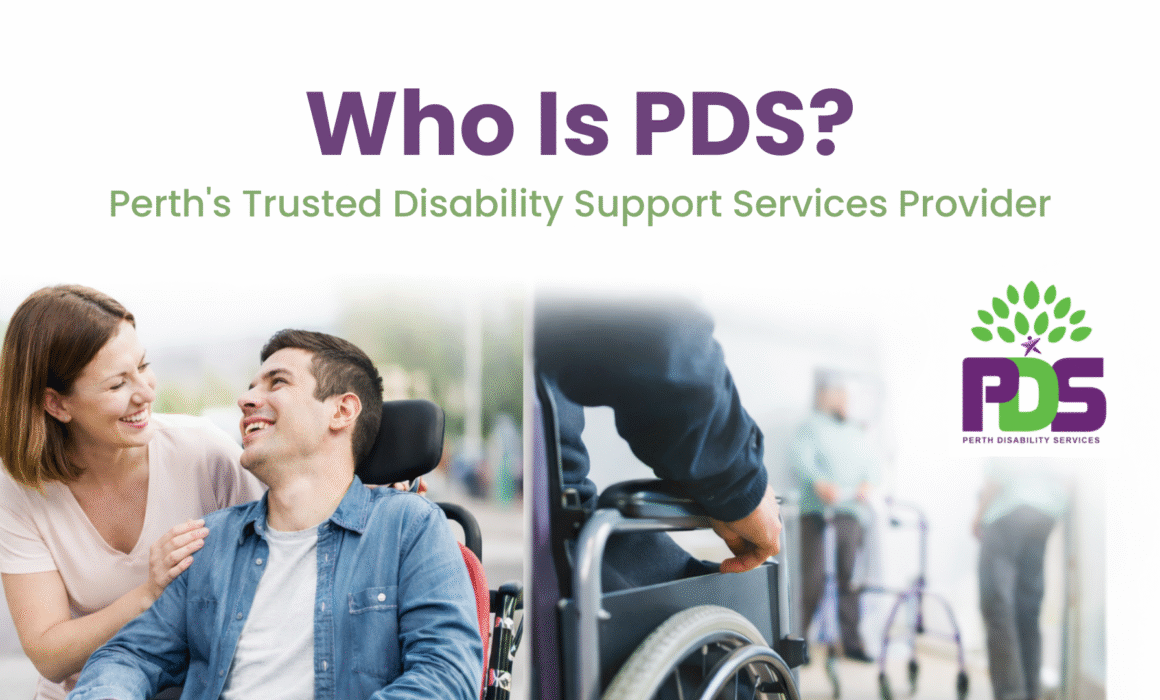
Who Is PDS? Perth’s Trusted Disability support Services Provider

PDS (Perth Disability Services) is a trusted disability support services provider committed to helping individuals with disabilities live more independent, meaningful, and empowered lives. Based in Perth, PDS works closely with participants, families, and carers to deliver personalised support through the National Disability Insurance Scheme (NDIS). 

Disability support services play an important role in improving the wellbeing and independence of individuals living with disabilities. PDS focuses on person-centred care, ensuring that each participant receives support tailored to their individual goals, preferences, and daily needs. 

Supporting Individuals Through the NDIS 

The National Disability Insurance Scheme (NDIS) provides funding to eligible Australians with disabilities so they can access services that improve their quality of life. As a Registered  NDIS provider, PDS helps participants access the right support services that align with their goals. 

These supports may include assistance with daily living, social and community participation, skill development, and other services designed to promote independence. 

By working collaboratively with participants and their families, PDS ensures that each support plan is designed around the participant’s needs and lifestyle. 

A Person-Centred Approach to Care 

One of the key principles behind PDS’s services is a person-centred approach. This means that participants are at the centre of all decisions regarding their support and care. 

Rather than a one-size-fits-all model, PDS focuses on understanding the goals and aspirations of each individual. Whether someone wants to build confidence, participate more in their community, or develop new life skills, the support team works alongside participants to help them achieve these outcomes. 

Promoting Independence and Community Participation 

Disability support is not only about assistance with everyday tasks. It is also about empowering individuals to participate fully in their communities and pursue their personal goals. 

PDS encourages independence by helping participants build essential life skills and gain confidence in managing their daily routines. Community participation is another important aspect of disability support, allowing individuals to engage in social activities, education, and employment opportunities. 

Through supportive and compassionate care, PDS helps participants live fulfilling lives while maintaining their independence. 

Why Choose PDS? 

PDS is dedicated to delivering high-quality disability support services that prioritise the wellbeing and independence of every participant. With experienced support workers and a strong understanding of the NDIS, the organisation aims to make the support journey easier for individuals and families. 

By focusing on personalised support, reliability, and respectful care, PDS has become a trusted disability services provider for many individuals in Perth. 

Let’s Stay Connected 

If you want to understand how disability support services can help you or your loved one live more independently, our team at PDS is here to guide you. 

📞 08 6118 9090
✉️ info@pdswa.com.au
🌐 https://www.perthdisabilityservices.com.au/ 


FAQ’s 

1. What does PDS stand for?
PDS stands for Perth Disability Services WA, a disability support provider offering services to NDIS participants in Perth. 

2. Who can access PDS services?
Individuals who are eligible for the NDIS can access support services provided by PDS. 

3. What types of support does PDS offer?
PDS offers a range of disability support services designed to help participants with daily living, community participation, and personal development. 

4. Does PDS provide personalised support plans?
Yes, services are tailored to each participant’s individual goals and needs. 

5. How can families get started with PDS?
Families can contact the team to discuss available support services and how PDS can assist with their NDIS journey. 

"For
Uncategorised

What You Should Know About Community Participation in the NDIS

People with disabilities might find it difficult to earn a livelihood and enjoy their life in a manner they could without their disabilities. Seeing these as sensitive grounds, the NDIS came into action and started assisting people falling within the eligibility criteria of being disabled. 

NDIS keeps a necessary spot for community participation as it works for the well-being of the group itself. However, most people are unaware of the way in which community participation is carried out under NDIS and we have rounded up some crucial points to acknowledge you with this part. 

  1. Sporting activities 

The NDIS funds multiple areas falling under the category of sporting activities. With the aim of keeping the disabled in excellent health, NDIS funds multiple areas so that it covers each sport so the disabled ones can show their involvement.

  1. Participation in social groups

Participation in social groups works both for the interest of the disabled ones as well as NDIS. This further helps achieve independence for each individual under the branches of NDIS, and it also works as a support system for them. We can also talk of this in the sense of fun benefitting the overall health of people under NDIS.

  1. Vacation activities

Holidays are by far the best means through which welfare for the disabled ones can achieve. Vacation activities not only provide joy but also work in the interest of the well-being of the disabled ones. Spending a little time away from the hustle and bustle of daily life results in the betterment of health and prevents further health issues in the body.

  1. Capacity building

Capacity building is a crucial aspect for each individual working under the assistance of NDIS. Capacity building works in the development of the disabled and adds more to the bunch of skills they hold. This aspect works in multiple fields and assists the disabled in getting hold of new jobs and enjoying their life as they wish.

  1. Recreational activities

Recreational activities hold optimum importance under NDIS and are inclusive of a variety of elements. Getting together with friends, family members, and close ones, visiting adventurous places, and many more together form up recreational activities.

End Thoughts

NDIS plays a crucial role in assisting the disabled ones and helping them get in touch with people falling in their community. As it goes for community participation, the above five examples are enough to acknowledge you with this part. For more information on this part, you can contact the NDIS support coordinator in Perth.  

Quick Contact

    Call us Now