


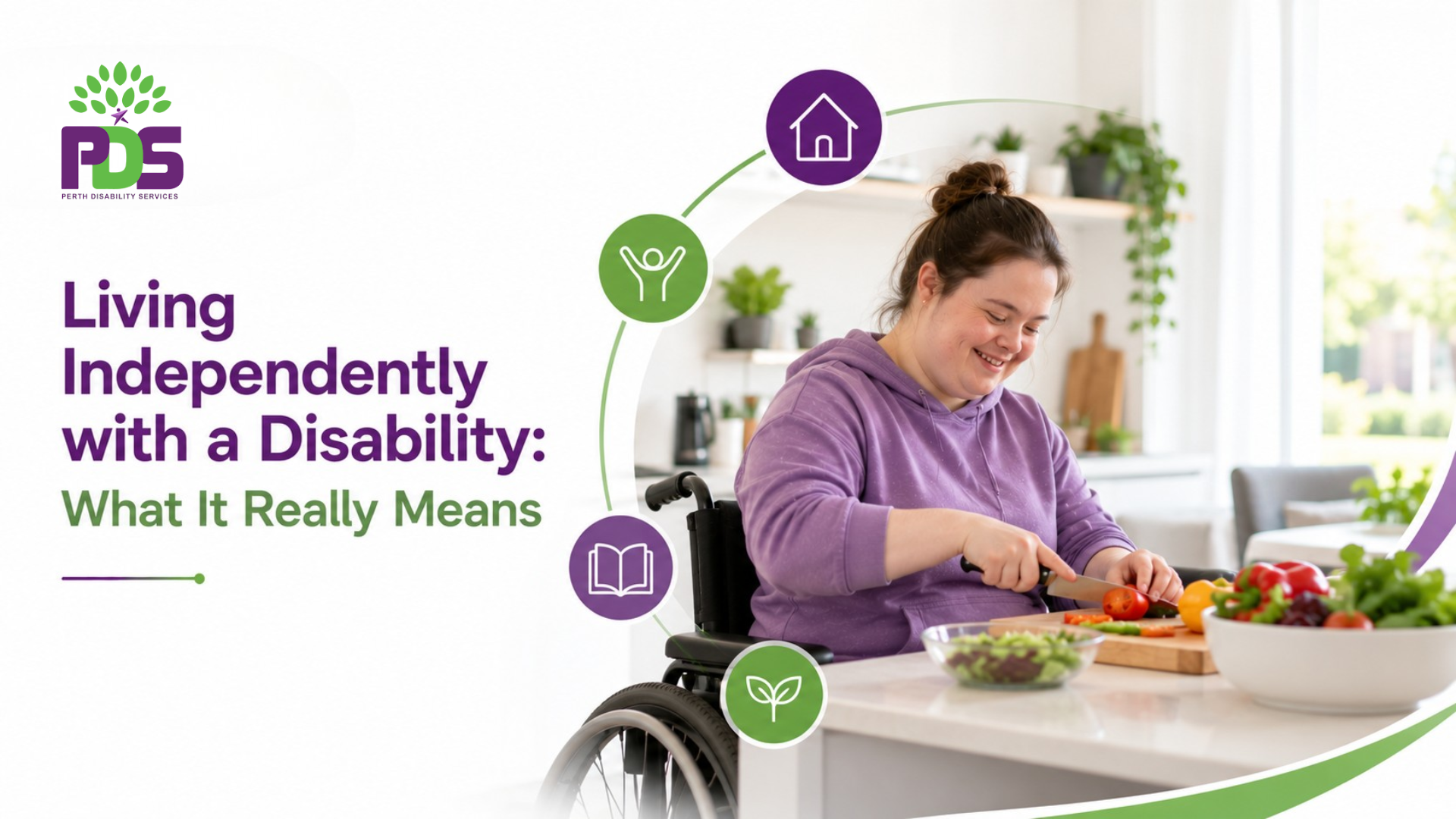
Living independently with a disability does not necessarily mean doing everything without support.
For many people, independence means having greater choice and control over everyday life, making personal decisions and having the right support to participate in activities that matter to them.
Independence can look different for every person. For one participant, it may mean learning to prepare meals or manage household tasks. For another, it may mean using public transport, making decisions about their routine, participating in the community or developing confidence to pursue education or employment.
The important question is not “Can I do everything on my own?” but rather “What support can help me do more for myself?”
The NDIS can provide supports designed to help participants work towards their individual goals, build skills and participate more actively in everyday life. At Perth Disability Services (PDS), support is focused on the individual, their preferences, abilities and goals.
Here is a closer look at what independent living can mean and how appropriate disability support can help make it possible.
What Does Independent Living Really Mean?
Independent living does not have one fixed definition.
A person can live independently while still receiving support from family members, support workers, therapists or other professionals.
For some participants, independence may involve:
- Making everyday decisions
- Managing personal routines
- Preparing meals
- Completing household tasks
- Going shopping
- Using public transport
- Participating in community activities
- Developing social connections
- Managing appointments
- Learning new skills
- Exploring education or employment
- Choosing how they spend their time
The level of support required can vary depending on a person’s abilities, circumstances and goals.
The focus should be on providing the right level of assistance without unnecessarily taking away opportunities for the participant to make choices or develop skills.
Independence Looks Different for Everyone
Every person has different abilities, interests and priorities.
For one participant, becoming more independent may mean learning how to cook a simple meal. For another, it may mean becoming comfortable travelling to a local activity without a family member.
Someone else may want to develop better communication skills, manage their own appointments or become more involved in community activities.
This means disability support should not follow a one-size-fits-all approach.
At PDS, support is designed around the individual participant and what they want to achieve.
How Disability Support Can Encourage Independence
Support workers can assist participants with everyday activities while also creating opportunities for them to participate and learn.
For example, instead of completing a household task entirely for a participant, a support worker may encourage them to take part in the activity according to their abilities.
This could include:
- Preparing ingredients for a meal
- Learning how to organise household items
- Practising shopping skills
- Planning a daily routine
- Using public transport
- Communicating with other people
- Participating in recreational activities
- Making choices about daily activities
The appropriate level of assistance will depend on the participant.
The goal is not to remove support but to use support in a way that encourages participation, confidence and skill development.
Building Confidence Through Everyday Activities
Independence often develops through small, consistent steps.
Everyday activities can provide opportunities for participants to practise skills and become more comfortable making decisions.
For example, a participant who wants to become more confident with shopping may begin by creating a shopping list with their support worker. Over time, they may participate more actively in selecting items, managing the shopping process and communicating with staff.
Similarly, someone working towards greater independence at home may gradually develop skills around cooking, cleaning, organising or managing routines.
Small achievements can contribute to larger personal goals.
Making Your Own Choices
Choice is an important part of independent living.
Participants should have opportunities to make decisions about their routines, activities, relationships and support where appropriate.
This can include simple everyday choices such as:
- What to eat
- What clothes to wear
- Which activities to participate in
- Where to go
- Who to spend time with
- How to structure parts of the day
- What personal goals to work towards
Having a disability does not mean a person should lose control over decisions that affect their life.
Support should help participants understand their options and make choices rather than automatically making decisions on their behalf.
Independence Does Not Mean Doing Everything Alone
One common misunderstanding about independent living is that independence means not needing anyone’s help.
This is not necessarily the case.
A person can be independent while using a support worker, assistive technology, community services or other forms of assistance.
For example, a participant may need support with transport but independently decide where they want to go. Another participant may need assistance preparing meals but choose what they want to eat.
The support enables participation without removing the person’s role in the activity.
Developing Skills for Daily Living
Daily living skills can play an important role in building independence.
Depending on individual goals, participants may work on skills such as:
- Personal routines
- Meal preparation
- Household organisation
- Cleaning
- Shopping
- Communication
- Time management
- Community participation
- Using public transport
- Managing appointments
- Developing social skills
Not every participant will need support in all these areas.
The focus should remain on the skills that are relevant to the individual’s life and goals.
The Role of Family and Carers
Family members and carers can be an important part of a participant’s support network.
They may provide encouragement, practical assistance and emotional support.
However, supporting independence can sometimes mean allowing participants opportunities to try things for themselves.
Instead of automatically completing a task, family members can encourage the participant to participate where appropriate.
For example, a family member might allow a participant to choose their own activity or encourage them to complete part of a household task independently.
The right balance will depend on the person’s abilities, preferences and circumstances.
Community Participation and Independence
Independence can extend beyond the home.
Being involved in the community can help participants develop confidence, social connections and practical skills.
Community participation may include:
- Visiting local community groups
- Going to recreational activities
- Participating in sports
- Attending social events
- Visiting libraries or community centres
- Shopping independently
- Exploring hobbies
- Connecting with friends
These experiences can provide opportunities to practise communication, decision-making and everyday skills.
Setting Personal Goals
Independent living is often connected to personal goals.
A participant may want to become more confident at home, develop social connections, find employment, participate in education or become more involved in the local community.
Breaking larger goals into smaller steps can make progress easier to understand.
For example:
Goal: Become more independent when travelling.
Possible steps:
- Learn the route
- Understand transport options
- Practise travelling with support
- Build confidence using public transport
- Gradually reduce assistance where appropriate
The pace will be different for every participant.
When Support Needs Change
A participant’s support needs can change over time.
Someone may develop new skills and require less assistance with certain activities. At other times, changes in circumstances may mean additional support is needed.
Changes may occur because of:
- New personal goals
- Changes in living arrangements
- Changes in health or disability-related needs
- Education or employment opportunities
- Changes in family circumstances
- Increased community participation
Regular communication can help ensure support continues to reflect the participant’s circumstances and goals.
How PDS Can Support Independent Living
At Perth Disability Services, support is focused on the individual participant.
The aim is to provide appropriate assistance while encouraging participants to develop skills, make choices and participate in everyday life.
Depending on individual needs and funded supports, assistance may involve everyday activities, community participation, household routines and other areas that support a participant’s goals.
The focus remains on providing support in a respectful and person-centred way.
Building Independence One Step at a Time
Independent living does not happen in exactly the same way for everyone.
For some participants, it may involve learning a new household skill. For others, it may mean making more decisions, developing confidence in the community or working towards education or employment.
What matters is that the participant has opportunities to participate, make choices and work towards goals that are meaningful to them.
At PDS, the focus is on supporting participants to live as independently and confidently as possible while respecting their individual needs and preferences.
FAQ’s
1. What does independent living mean for a person with disability?
Independent living means having choice and control over everyday life while receiving the appropriate level of support needed to participate and work towards personal goals.
2. Does living independently mean I cannot receive support?
No. A person can live independently while receiving assistance from support workers, family members, therapists or other services.
3. How can disability support help build independence?
Support workers can assist participants with everyday activities while encouraging them to participate, practise skills, make decisions and gradually build confidence.
4. Can PDS help with everyday living skills?
PDS provides person-centred disability support that can assist participants with appropriate everyday activities and community participation based on their individual needs and funded supports.
5. Can independence goals change over time?
Yes. A participant’s goals, circumstances and support needs can change. Support can be reviewed and adjusted to reflect those changing needs.