


Understanding NDIS funding can sometimes feel confusing, particularly when different support budgets and categories are used to describe the assistance available in a participant’s plan.
Two important NDIS support budgets are Core Supports and Capacity Building Supports.
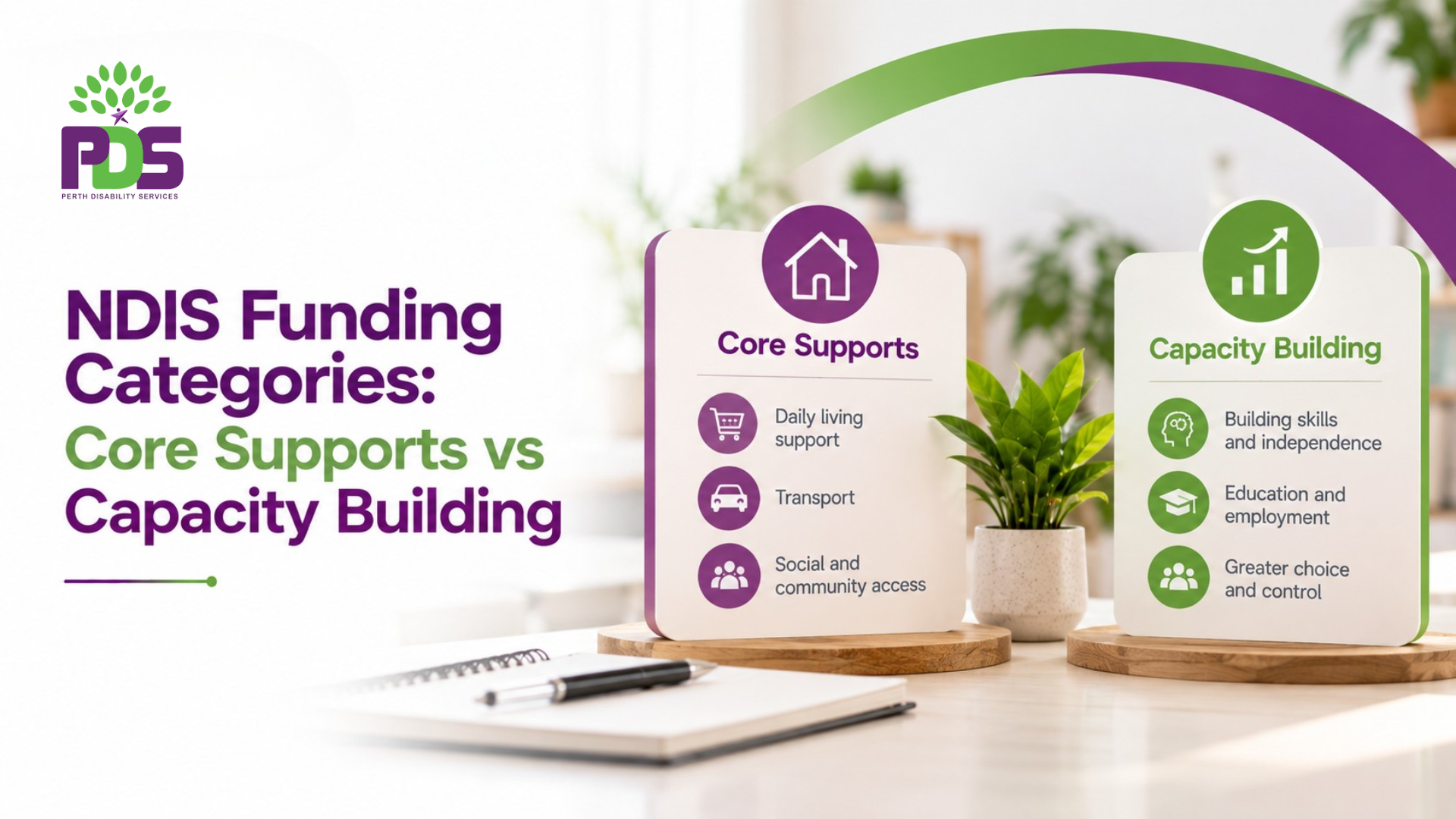
In simple terms, Core Supports are generally designed to help with everyday activities and community participation, while Capacity Building Supports are designed to help participants build skills, independence and capacity to work towards their goals. NDIS
The NDIS currently groups funding into four support budgets: Core Supports, Capacity Building Supports, Capital Supports and Recurring Supports. Not every participant will have funding in every budget because plans are based on individual needs. NDIS
Understanding the difference between Core and Capacity Building Supports can make it easier to understand what your NDIS plan is designed to help you achieve.
What Are Core Supports?
Core Supports are designed to help participants with everyday activities and participation in the community. NDIS
Depending on a participant’s plan, Core Supports may assist with activities such as:
- Personal care
- Household tasks
- Cooking
- Cleaning
- Community participation
- Social activities
- Everyday assistance
- Certain consumables
The NDIS currently identifies three Core support categories: Assistance with Daily Life, Consumables, and Assistance with Social and Community Participation. NDIS
Core Supports funding is generally flexible, meaning participants can use the total amount within the relevant Core budget across eligible supports in ways that suit their needs, subject to NDIS rules and their plan. NDIS
What Are Capacity Building Supports?
Capacity Building Supports are designed to help participants build skills and increase their independence.
Rather than focusing only on assistance with what a person needs today, these supports can help participants develop skills and work towards longer-term goals. NDIS
Depending on the participant’s plan, Capacity Building Supports can include areas such as:
- Support coordination
- Improved living arrangements
- Increased social and community participation
- Finding and keeping a job
- Improved relationships
- Improved health and wellbeing
- Improved learning
- Improved life choices
- Improved daily living
These categories can support participants to develop skills, confidence, independence and greater participation in different areas of life. NDIS
Core Supports vs Capacity Building: What Is the Difference?
The simplest way to understand the difference is to look at the purpose of the support.
Core Supports generally help a participant manage everyday activities and participate in the community.
Capacity Building Supports are designed to help build skills, independence and capacity to work towards goals.
For example, a participant may receive Core Support assistance with an everyday activity while also using a Capacity Building Support to develop skills that may help them become more independent with that activity over time.
However, the exact supports available depend on what is included in the participant’s plan.
Examples of Core Supports
Core Supports can assist participants with practical activities that are part of everyday life.
For example, a participant may receive assistance with:
- Personal care
- Meal preparation
- Household tasks
- Cleaning
- Shopping
- Community activities
- Social participation
- Everyday routines
The type and level of support will depend on the participant’s individual circumstances and funded supports.
The NDIS states that Core Supports can help participants complete regular tasks such as cooking, cleaning and personal care, as well as participate in social and community activities. NDIS
Examples of Capacity Building Supports
Capacity Building Supports focus on developing skills and increasing independence.
For example, supports may assist a participant to:
- Develop daily living skills
- Improve communication
- Build social skills
- Develop employment-related skills
- Work towards education goals
- Improve living skills
- Develop organisational skills
- Build greater independence
- Coordinate and manage supports
The exact supports available depend on the categories and funding included in the participant’s plan. NDIS
How Core and Capacity Building Supports Can Work Together
Core and Capacity Building Supports do not necessarily need to be viewed as completely separate parts of a participant’s support journey.
They can serve different purposes while contributing towards the same broader goals.
For example, imagine a participant wants to become more independent at home.
Core Supports may provide assistance with everyday activities where support is required.
At the same time, Capacity Building Supports may help the participant develop skills related to daily living.
The combination can provide both practical assistance and opportunities for skill development.
The specific funding and supports available will depend on the participant’s individual NDIS plan.
Understanding Flexible and Stated Funding
One important part of understanding NDIS funding is knowing whether a support category is flexible or stated.
The NDIS explains that flexible funding allows participants to use their funding in ways permitted within the relevant budget, while stated funding must be used for the specific supports described in the plan. NDIS
Core Supports are generally flexible, although participants still need to use their funding for eligible NDIS supports and in accordance with their plan. NDIS
Capacity Building Supports are generally stated at the support-category level, meaning funding generally cannot simply be moved between different Capacity Building categories. NDIS
This is why participants should check their individual plan before deciding how funding can be used.
Can You Use NDIS Funding for Any Support?
No.
Having funding in an NDIS plan does not mean it can be spent on any service or product.
The NDIS explains that funding can only be used for supports that meet the relevant NDIS requirements, relate to the participant’s disability and are in line with their plan. NDIS
Participants should therefore understand:
- Which support budget contains their funding
- Which support category applies
- Whether the funding is flexible or stated
- What type of NDIS support can be purchased
- Whether the support relates to their disability and goals
If something is unclear, participants can seek guidance about using their NDIS funding.
Choosing the Right Support for Your Goals
NDIS funding should connect with the participant’s individual needs and goals.
For example, a participant whose goal is to become more independent at home may need support with everyday activities as well as opportunities to develop daily living skills.
Another participant may have goals around community participation, employment, education or social connections.
The appropriate combination of supports will depend on the individual’s plan.
This is why understanding the purpose of each funding category can be helpful when planning how to use available supports.
How PDS Can Support Participants
At Perth Disability Services, support is centred around the individual participant.
PDS can provide person-centred disability support that focuses on everyday needs, community participation and helping participants work towards their individual goals, depending on their NDIS funding and support requirements.
Support can be tailored around the participant’s preferences, abilities and circumstances rather than following the same approach for everyone.
Making the Most of Your NDIS Funding
Understanding your NDIS funding can help you make more informed decisions about your supports.
Core Supports can help with everyday activities and community participation, while Capacity Building Supports can help participants develop skills and independence. NDIS
The two can support different parts of a participant’s journey.
The key is to understand what is included in your individual plan, how each budget works and which supports are appropriate for your goals.
If you are unsure about your funding or how a particular support can be used, checking your plan and seeking appropriate NDIS guidance can help you use your funding correctly.
FAQ’s
1. What are Core Supports in the NDIS?
Core Supports help participants with everyday activities and community participation. They can include assistance with daily life, consumables and social and community participation, depending on the participant’s plan. NDIS
2. What are Capacity Building Supports?
Capacity Building Supports help participants build skills, independence and capacity to work towards their goals. They can include areas such as daily living, employment, relationships, learning and support coordination. NDIS
3. What is the main difference between Core and Capacity Building Supports?
Core Supports generally focus on assistance with everyday activities and community participation, while Capacity Building Supports focus on building skills, independence and capacity.
4. Can Core Supports be used flexibly?
Core Supports are generally flexible, allowing participants to use their available funding across eligible supports within the relevant Core budget, subject to the NDIS rules and their plan. NDIS
5. Can I move Capacity Building funding between categories?
Capacity Building funding is generally stated by support category, so funding cannot simply be moved between different Capacity Building categories. Participants should check their individual plan for the specific rules that apply to their funding